Management & Project Coordination
Objectives, requirements, priorities and development activities are coordinated around each project.
FET is structured to keep technical direction, project coordination, engineering and system integration close to the development activity, while activating specialised external capabilities when they add value to the project.
The objective is not to internalise every activity, but to maintain control of the technology, the project and the final result.
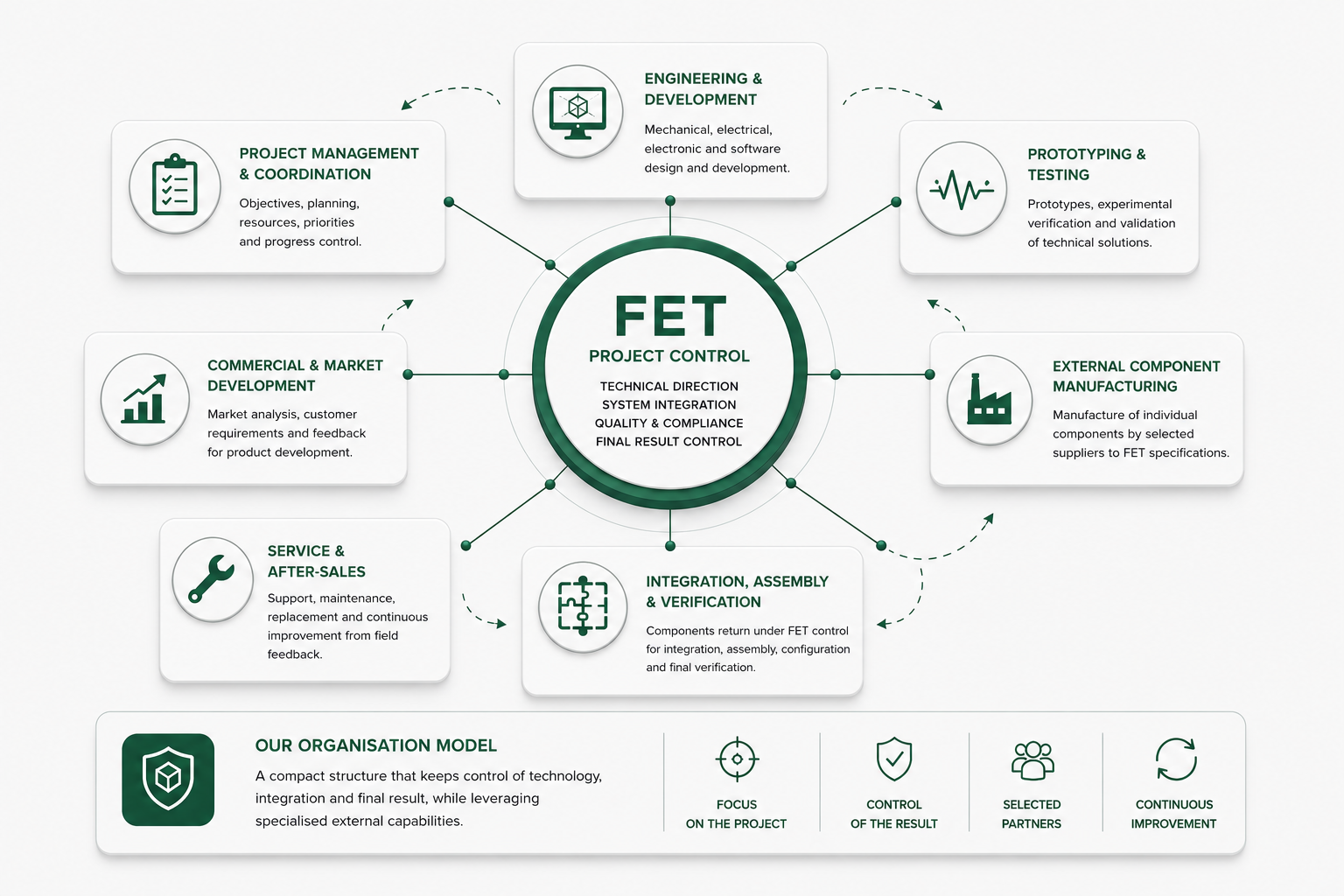
FET keeps technical responsibility, system integration and final product control internally, while component manufacturing is assigned to selected suppliers according to FET specifications.
Objectives, requirements, priorities and development activities are coordinated around each project.
Mechanical, energy, electrical and electronic functions are designed and developed as parts of one integrated system.
Physical prototypes and experimental verification connect engineering decisions with real operating behaviour.
Individual components are manufactured by selected external suppliers according to technical specifications defined and controlled by FET.
Components return under FET control for system integration, assembly, configuration and consolidation of the final product.
Final functional verification remains under FET control. Formal tests and certification activities are externally supported when required.
Customers, applications and market opportunities provide requirements and feedback that guide product development.
Post-sale support is primarily managed through component or product replacement, under warranty or as a paid after-sales service.
FET defines the product architecture and technical specifications, coordinates outsourced component manufacturing and then brings the components back under direct control for integration, assembly and final verification.
FET maintains control of the final product throughout the entire development and realization process.

External manufacturing supports the realization process without transferring control of the product, its integration or its final verification.
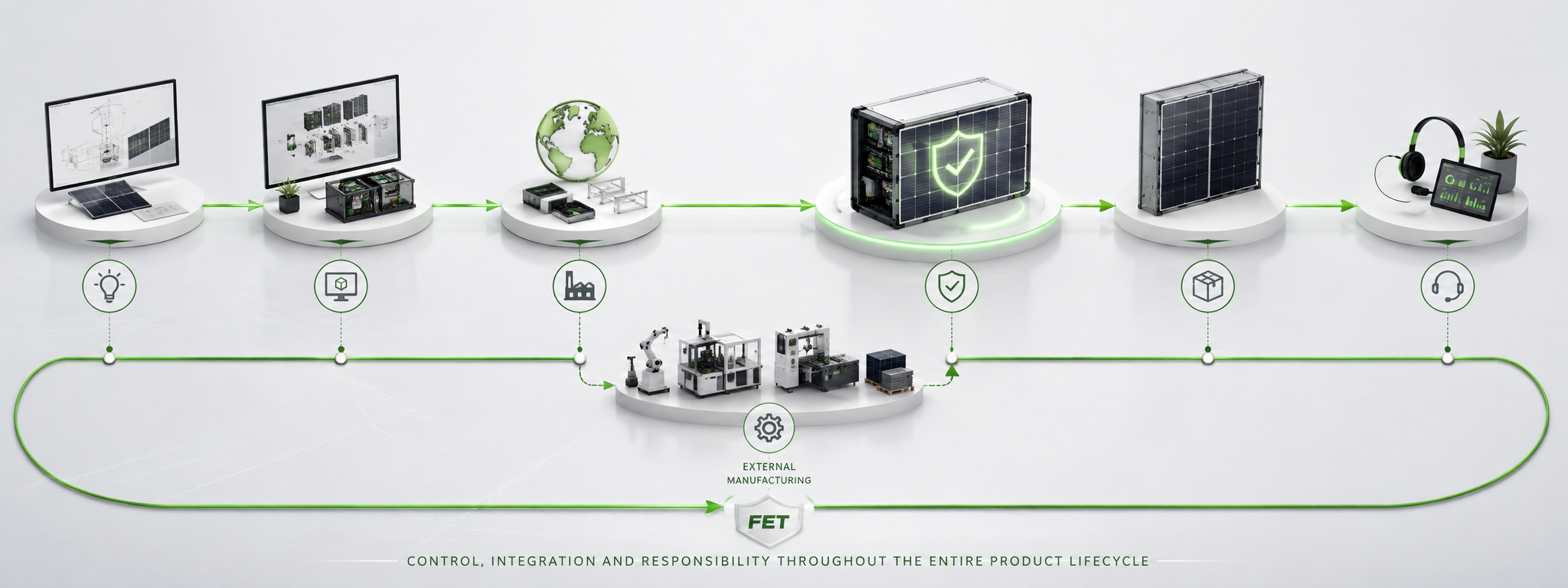
The same technical control established during development continues through component sourcing, internal integration, verification and delivery.
After delivery, service and after-sales complete the product cycle through replacement under warranty or paid replacement when required. Feedback from products in use can then return to engineering and support subsequent improvements.
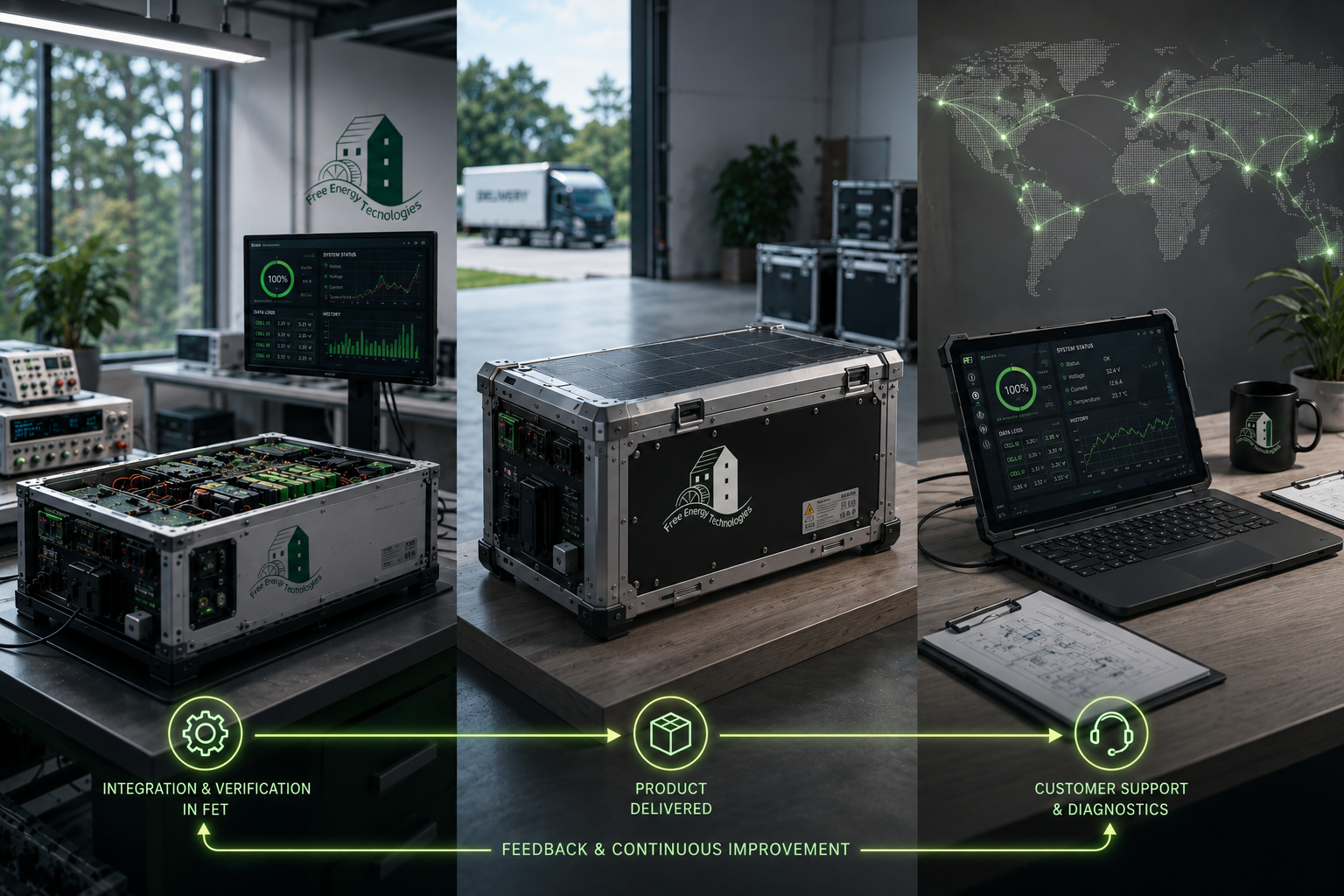
FET combines internal engineering, integration and verification with outsourced component manufacturing to develop, realise, deliver and support innovative products and systems.