Need & Opportunity
Understand the required function, operating environment and practical value of the solution.
FET development activity often begins with a specific requirement, an application opportunity or a function that cannot be efficiently obtained with a conventional solution.
From there, technical development connects concept, engineering, physical realization and verification with the objective of reaching a product or system that can actually be built and used.
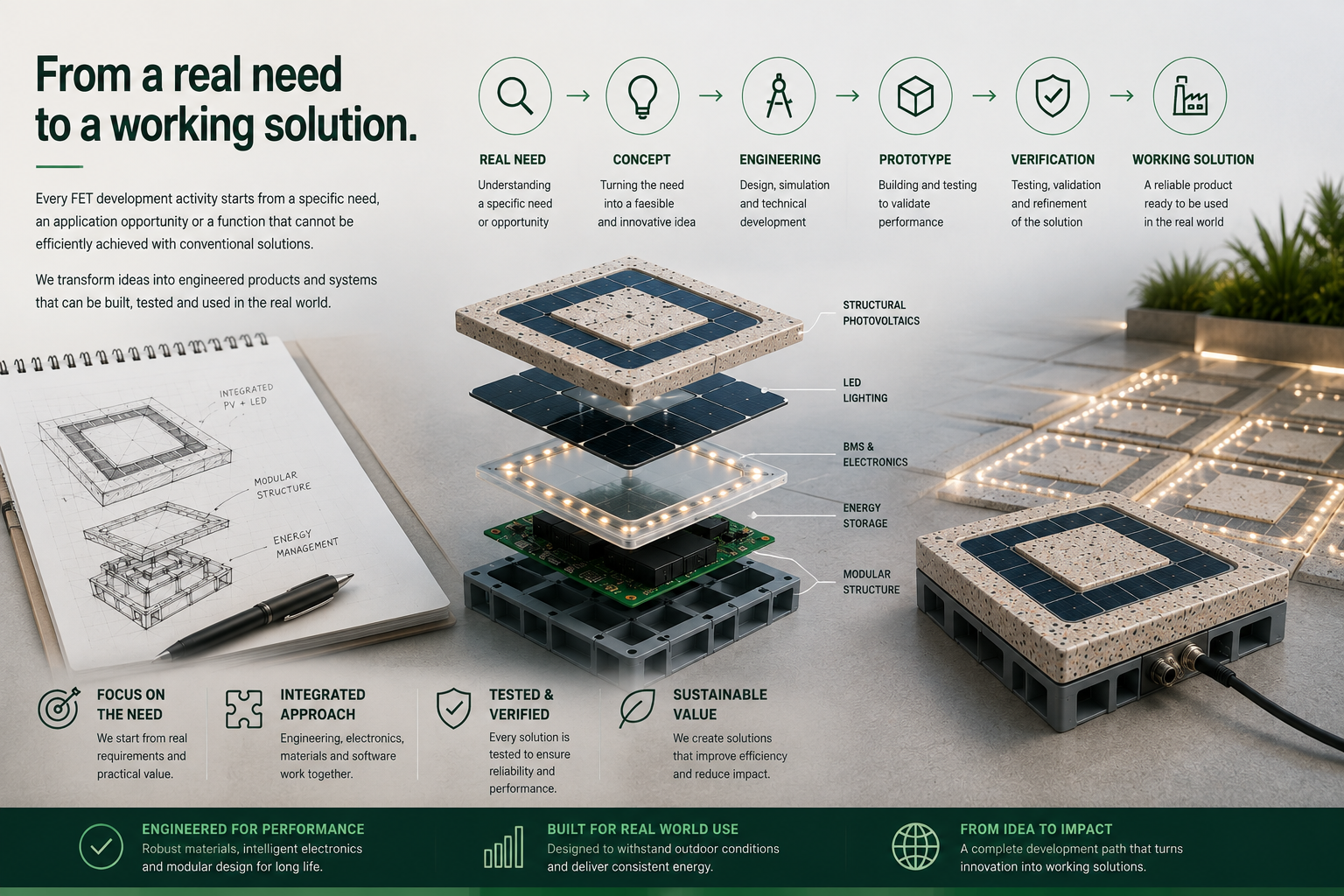
Development is not always linear. Prototypes and tests provide information that can lead back to design, component selection or system integration before the solution is consolidated.
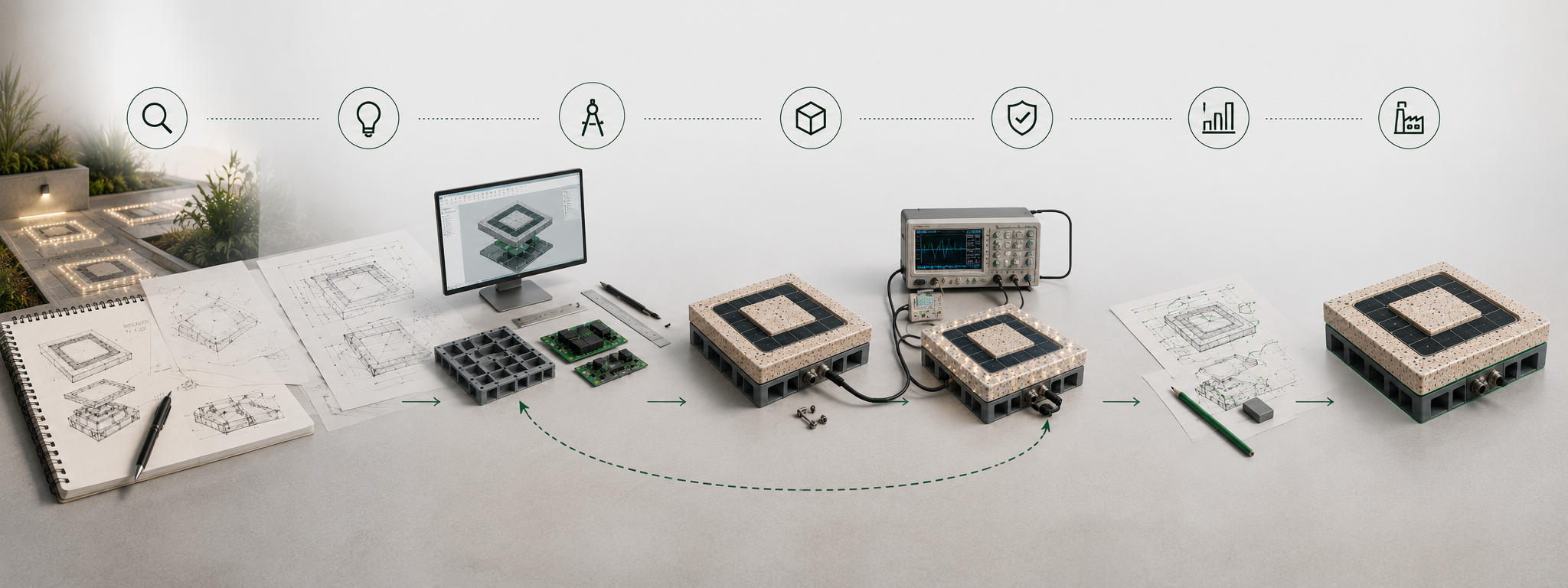
Understand the required function, operating environment and practical value of the solution.
Define the functional architecture and identify the technologies that can best address the requirement.
Develop mechanics, energy functions, electronics, control and interfaces as an integrated system.
Move rapidly from design to physical hardware in order to verify the real behaviour of the solution.
Check functions and performance, then refine the design when experimental results identify improvements.
Stabilise components, interfaces and realization methods to obtain a repeatable solution.
Prepare the system for realization at the scale required by the application and its market.
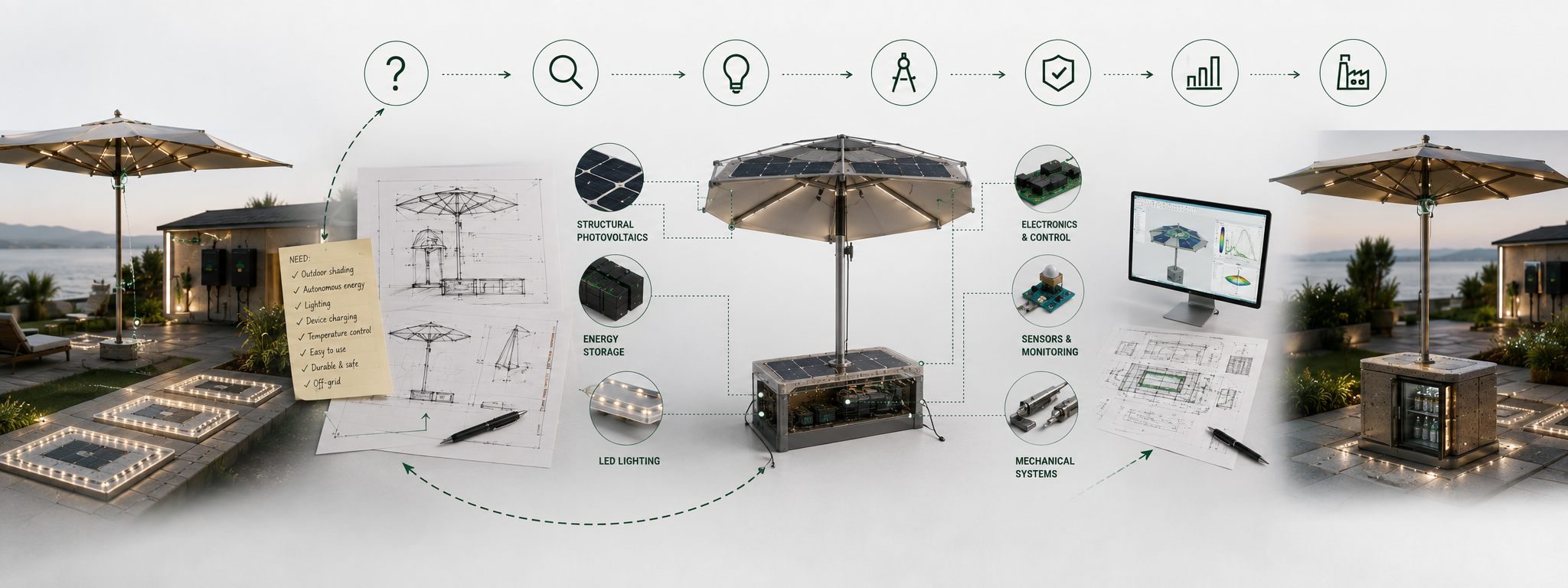
Many FET activities are developed around a specific host product, customer requirement or operating context. This makes integration part of the project from the beginning rather than an adaptation performed at the end.
The objective is to use available technologies only where they create a measurable functional, economic or operational advantage.
A technically successful prototype is not enough. Materials, components, assembly methods, external processes and repeatability are considered progressively while the design is being consolidated.
This approach keeps engineering connected to the practical constraints of building the product, while allowing the realization model to evolve according to required quantities and available production resources.
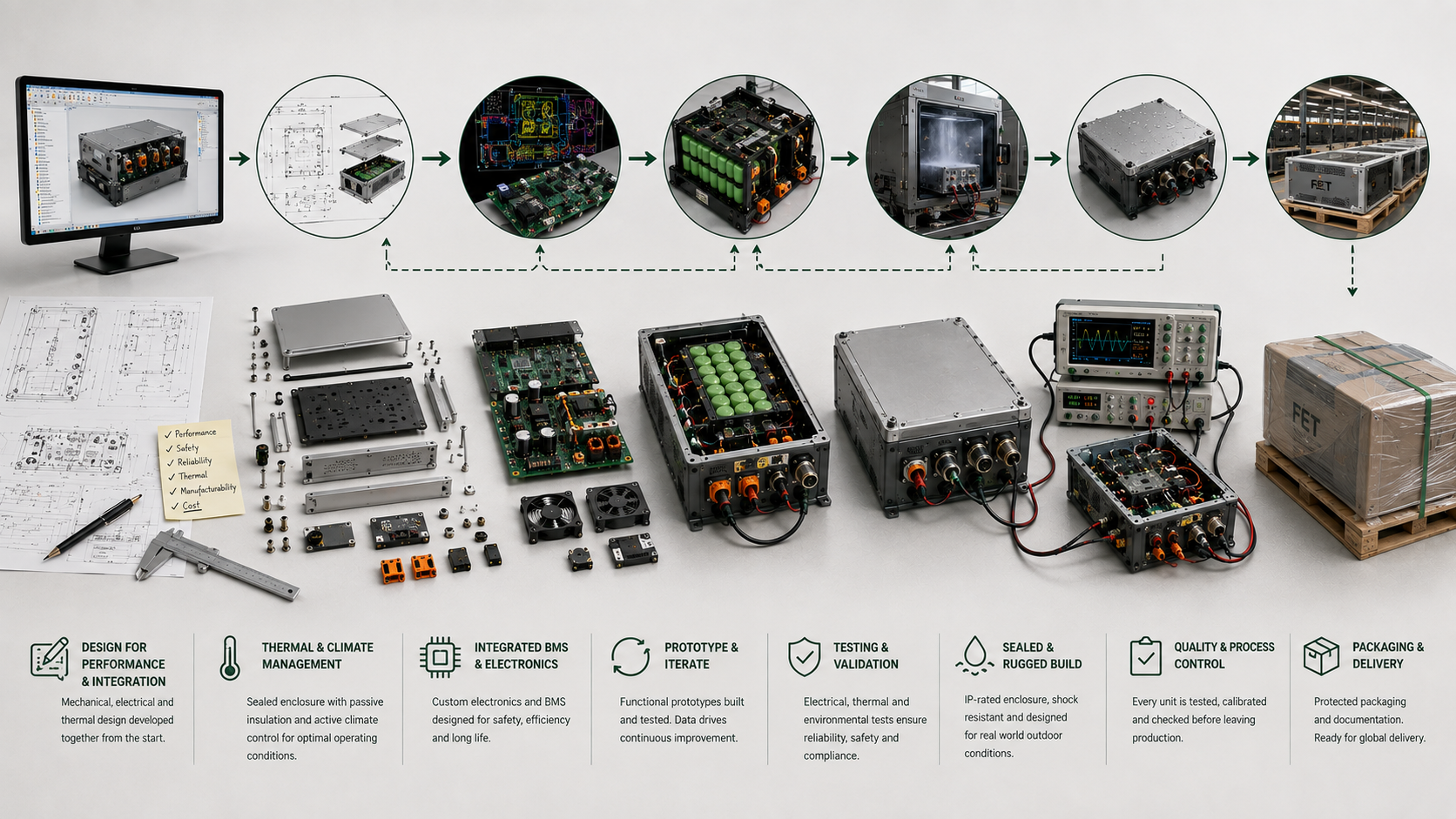
Experimental development creates a feedback loop between engineering and physical verification. Each cycle reduces uncertainty and moves the project toward a more mature and reproducible solution.
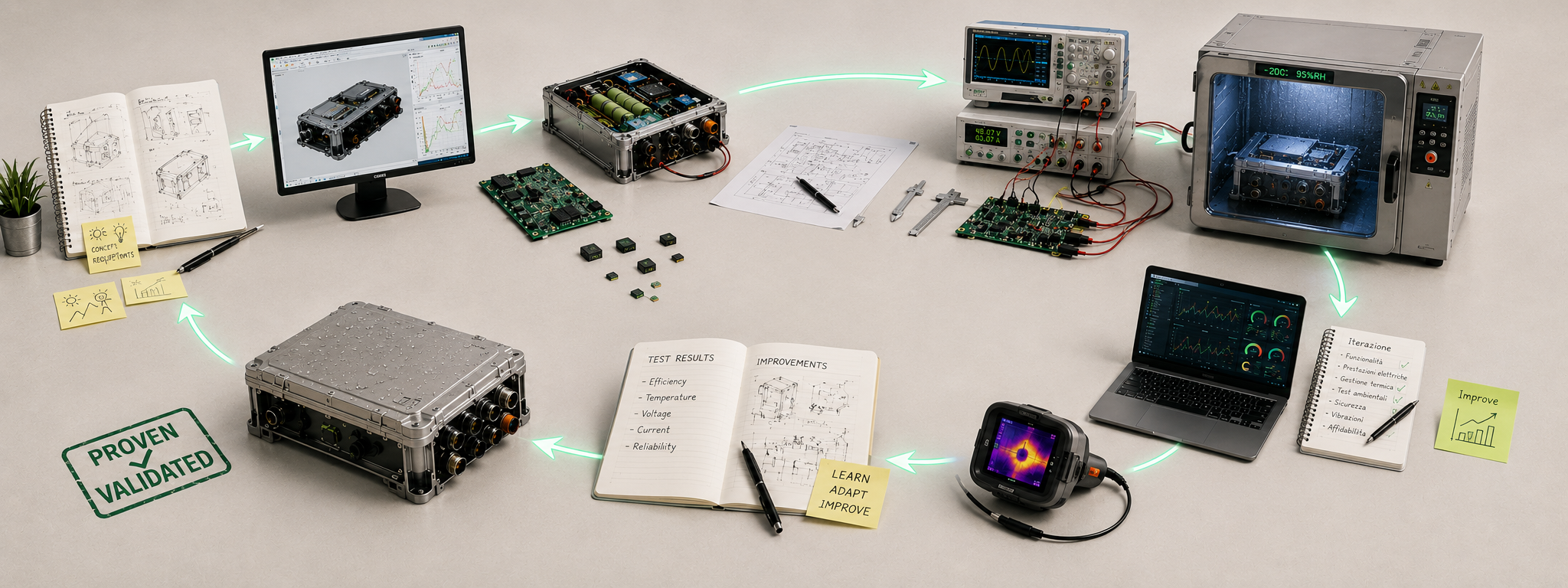
For FET, development continues through realization, verification and consolidation until an innovative function becomes a practical working system.