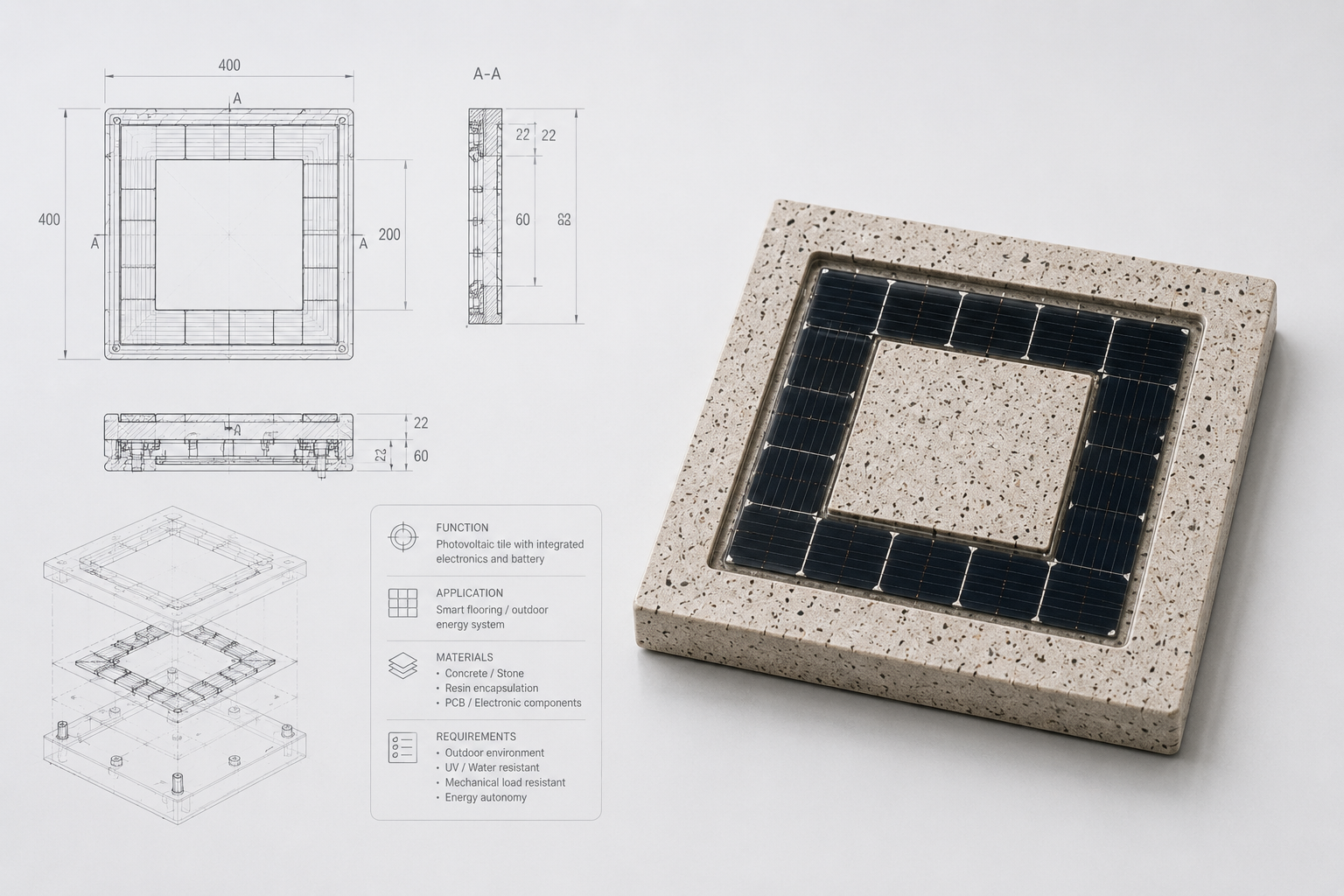
Design & Requirements
Functions and technical requirements are defined together with the constraints of the intended application.
For FET, quality begins during development. Requirements, materials, components, interfaces and verification activities are considered from the design stage so that an innovative function can become a reliable physical system.
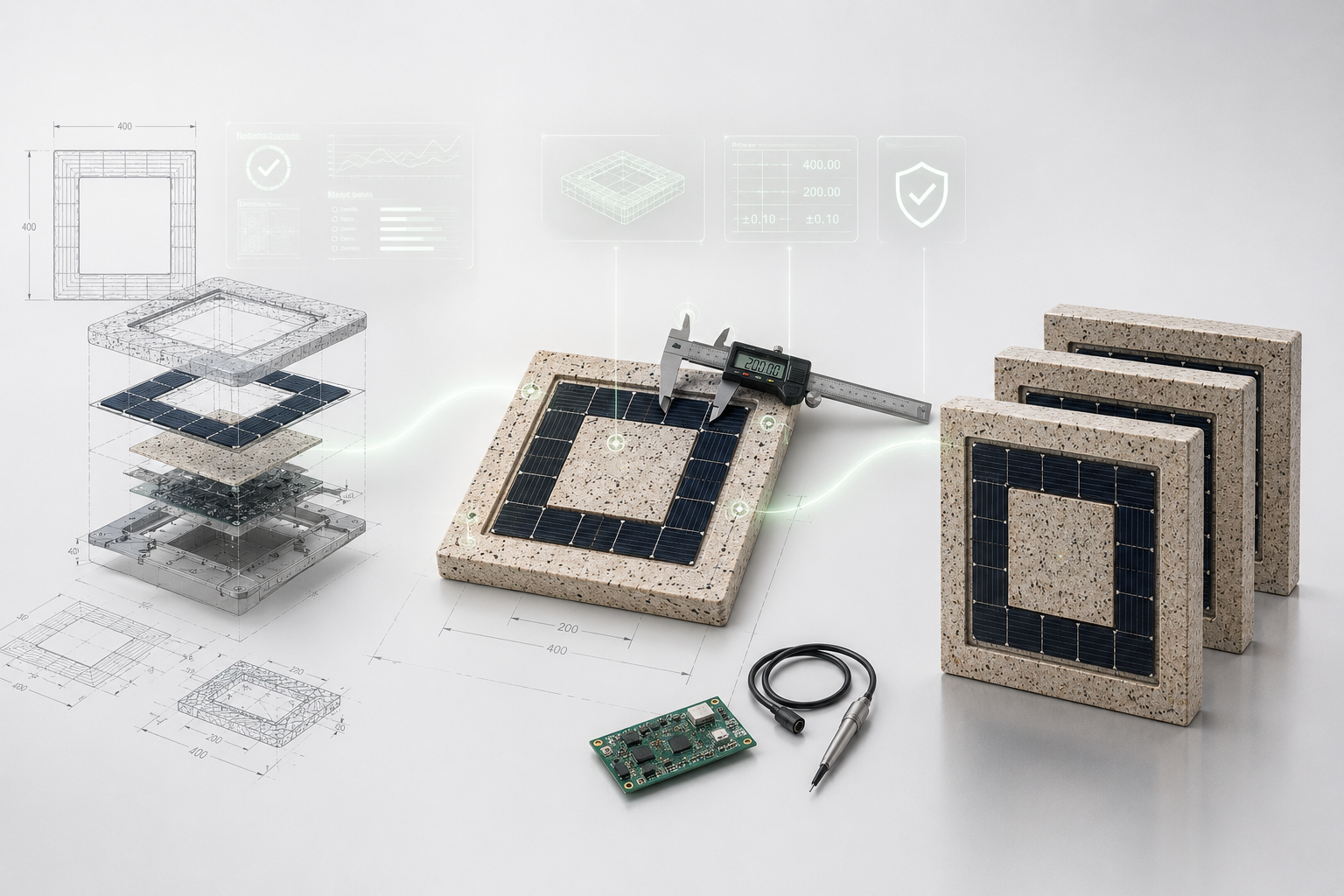
Design choices determine much of the final reliability of a product. FET develops components and systems considering their real operating conditions, integration constraints, materials and intended use.
Functions and technical requirements are defined together with the constraints of the intended application.
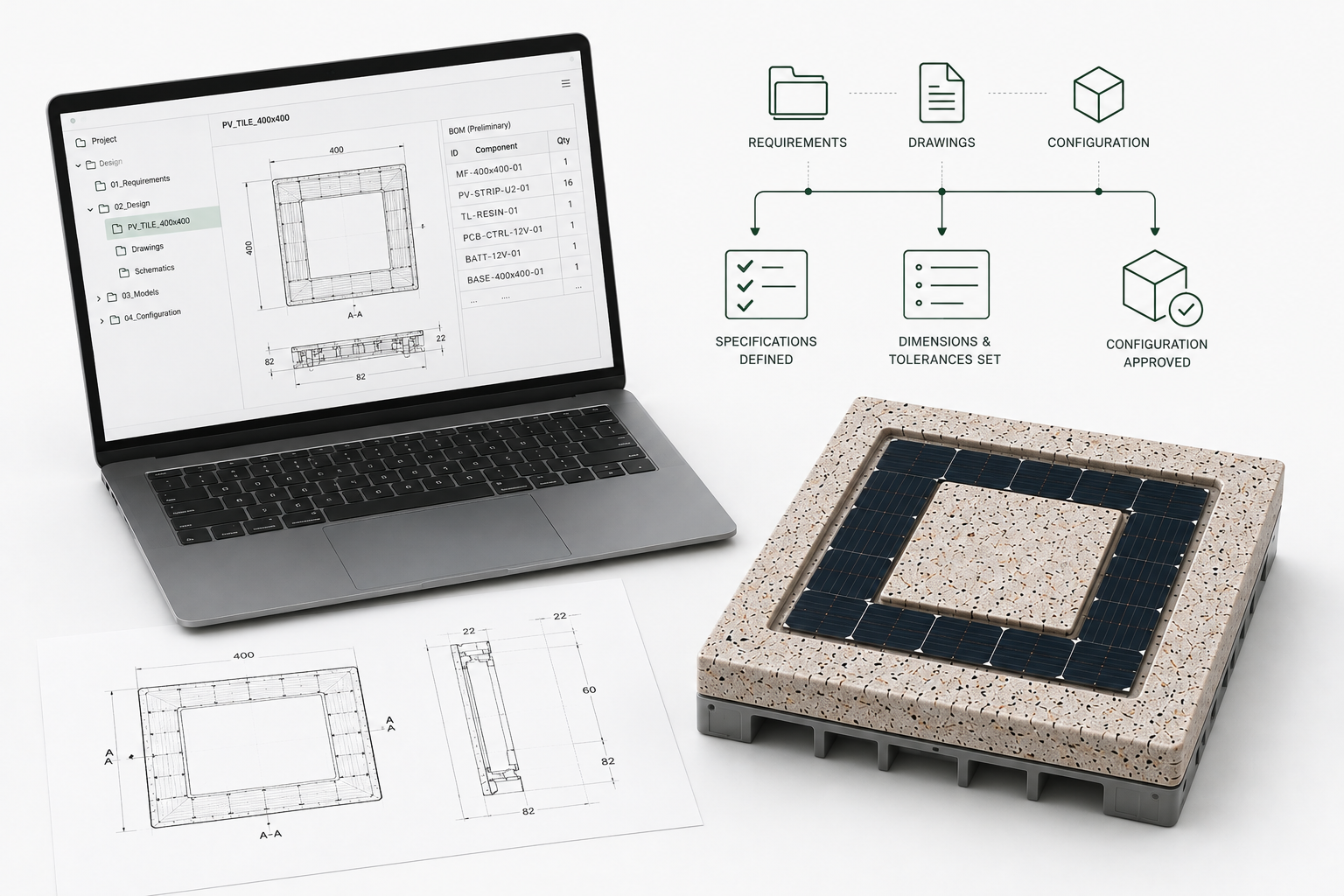
Drawings, technical documentation and product definitions are identified and maintained through revision and configuration levels during development and realization.
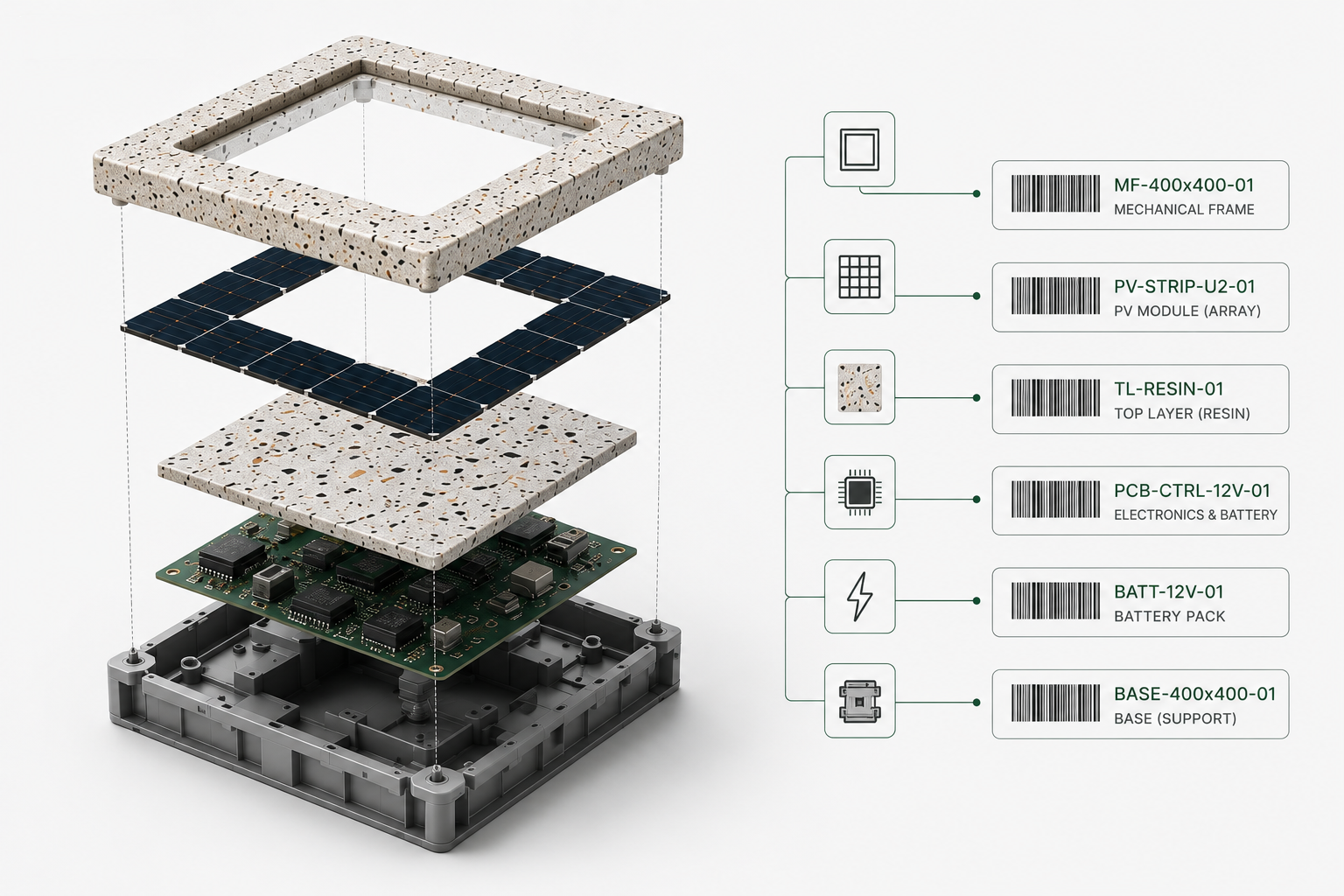
Components are identified and maintained at defined levels, with basic traceability according to the needs of the application and product configuration.
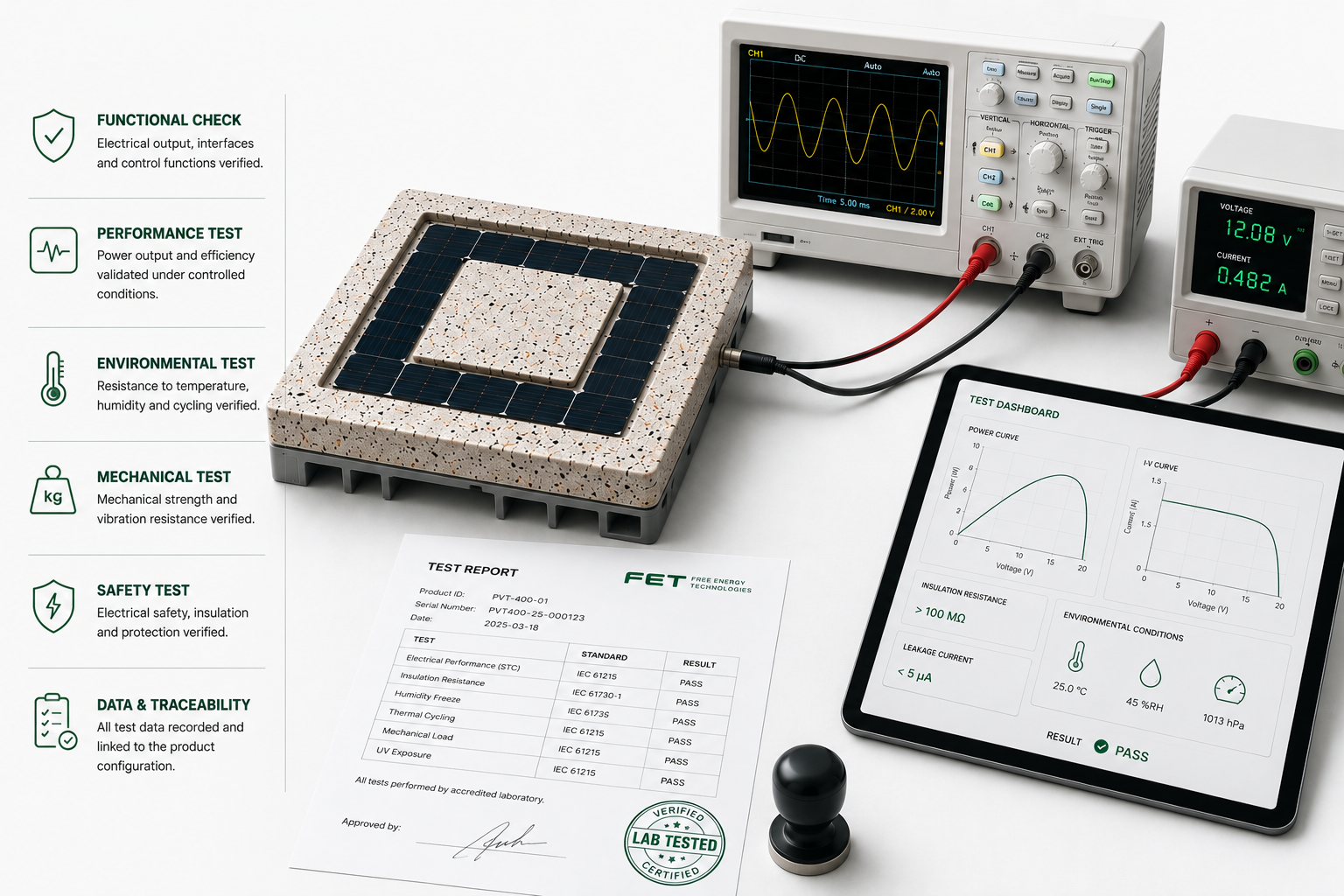
Prototypes and subsystems are checked during development to verify functions, interfaces and performance before consolidation.
Formal testing, conformity assessment and certification are supported by qualified external laboratories and certification bodies when required.
A successful prototype is only the beginning. The objective is to transform the result into a solution that can be realized again with consistent performance and controlled configuration.
FET currently manages certification on a product- and component-specific basis. When formal testing, conformity assessment or certification is required, these activities are supported by qualified external laboratories and certification bodies.
This approach allows each development to follow the standards and verification path appropriate to its technology and intended use.
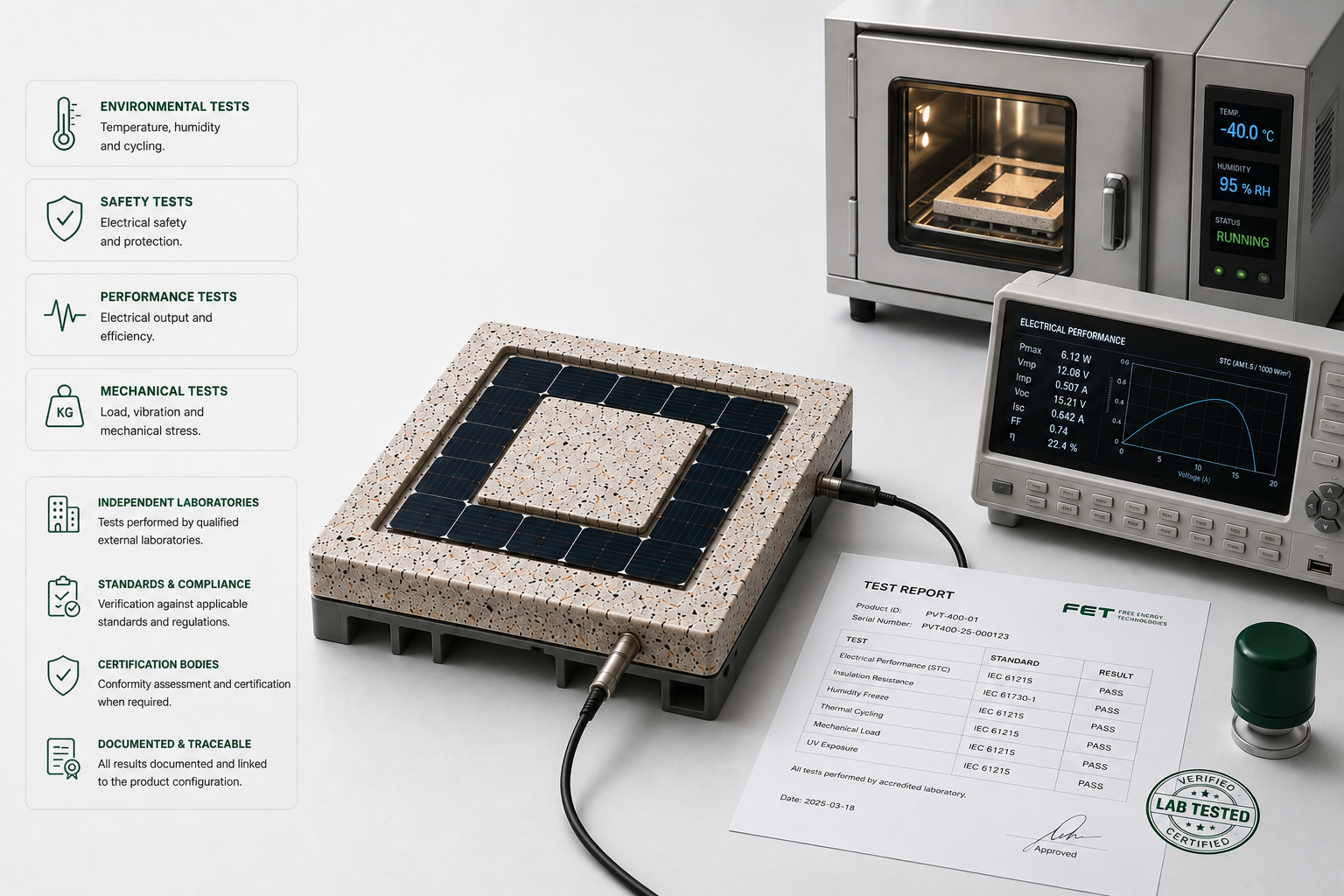
Configuration control, testing and product-specific compliance are part of the transition from experimental development to repeatable realization.
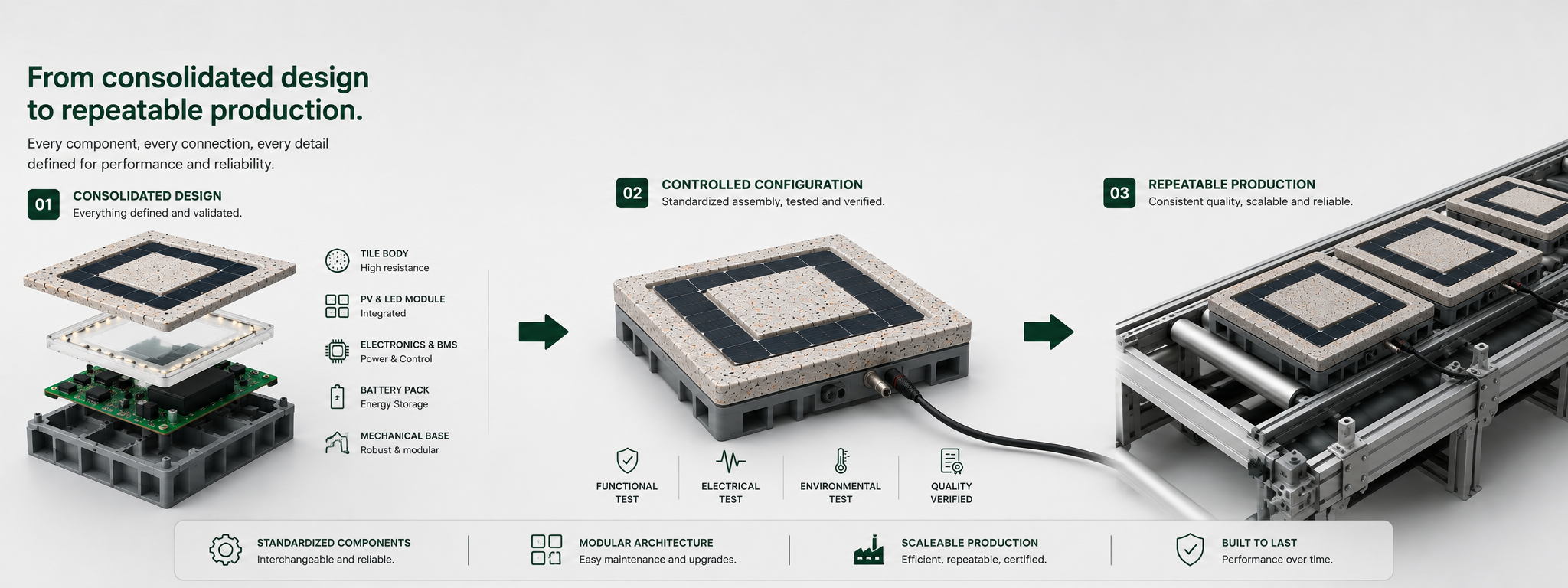
Requirements, drawings, documentation and configuration levels.
Internal functional and technical checks against the controlled configuration.
External testing or certification where required.
Freeze the configuration required for repeatable realization.
As FET moves from development activities toward continuous production, the company quality management system will evolve in parallel, with formal certification representing a subsequent step in that industrial development.
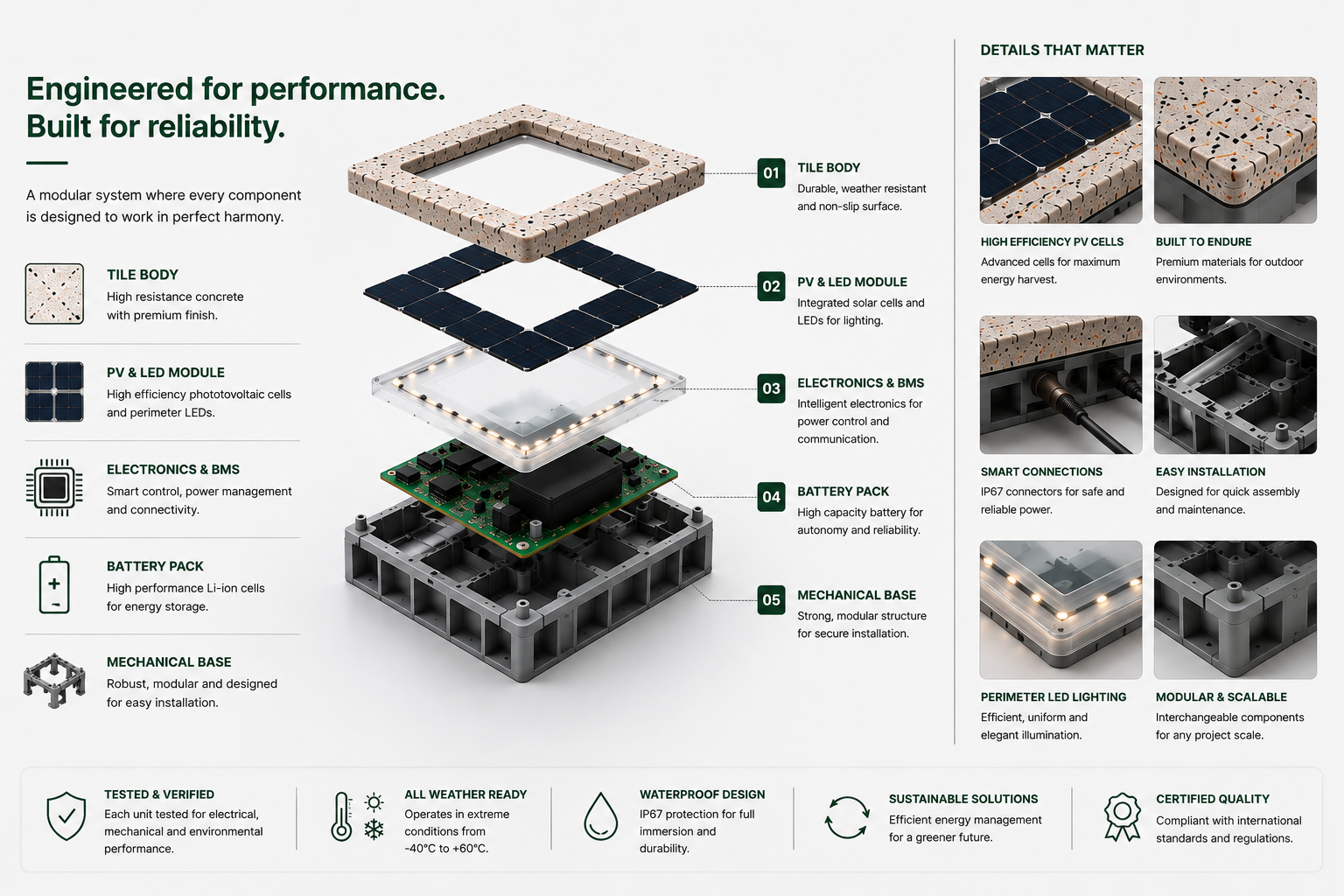
Quality connects technical innovation with reliable realization — from the first design choices to product-specific compliance and repeatable production.